


At Olympia, our books are spread across a myriad different genres; everything from children's literature to memoirs, poetry to action-packed thrillers. Amidst these are a sprinkling of horror books, novels that explore cosmic terror, the twisted, the dark and the wicked. We recently spoke with Lane Oliver, author of the eerie and bleak novella "Stag", released with us in January. We talked about writing at an early age, horror books and films that had a profound effect on him, and music!
You can purchase a copy of "Stag" through our website!
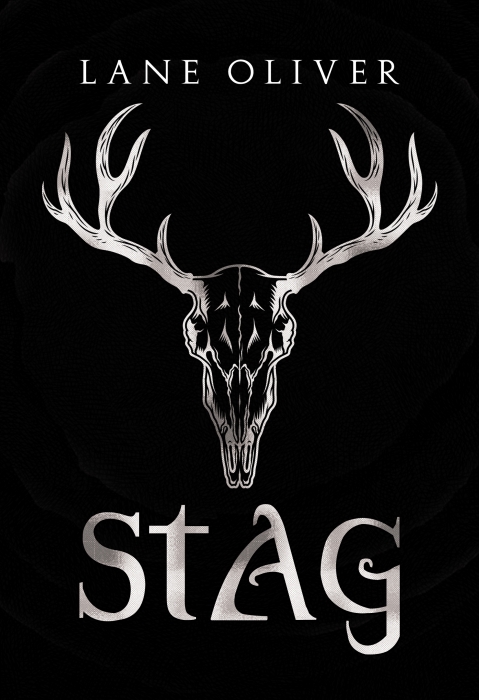
1). “Stag” is your debut novella, and you’ve looked to a number of different inspirations across multiple genres. The tale is very much southern gothic at heart, but with an ever-present horror element. What horror novels have had the biggest impact on you throughout your life, and why?
LO: Like many young people interested in horror, Dean Koontz and Stephen King were the first authors I gravitated to when I decided to read big-boy books. I read Koontz’s “Phantoms” and King’s “Thinner” when I was around 10-12 years old. There is a scene in “Phantoms” that suck with me where the main characters find the severed heads of some of the town’s residents in ovens. How could it not stick with me? The Lovecraftian, hive-minded entity that created clones of the people it consumed was pretty memorable too. “Thinner” struck me a bit differently because I had never read something that bleak before. I was accustomed to big scary monster scares in horror at the time, not self-destructive protagonists and pessimistic endings. I believe reading that novel jumpstarted my interest in darker subject matter, not just in horror. Stories about tragedy, trauma, and people at their worst began to interest me more than straight-up horror as I got older. As a teen, I discovered Lionel Shriver’s “We Need to Talk About Kevin” and the works of Cormac McCarthy. Those stories resonated with me because of their violence, their bleakness, and their humanity. I think without cutting my teeth on Koontz and King I would have never discovered the aforementioned authors and “Stag” wouldn’t exist.
2). When you were younger, you used to write short stories and flash fiction. Were you always writing horror back then, or did you branch out to other genres?
LO: It was just horror at the time. What you are referring to is when I was in elementary school. I would take sheets of paper and fold them brochure-style and I would write a paragraph-long story in each section. At that age, I was enthralled by R.L. Stine’s “Goosebumps” series, like most kids in the 90s, so the stories were in that vein. Although I had not read Stephen King at that point, I had seen some of the movie and television adaptations of his work, although I probably shouldn’t have. So, some of that Kingness made its way onto those pages. I continued to write little goofy horror stories for my amusement throughout my adolescence, but the passion for writing fizzled out during high school and my early years at college while I pursued other interests. I picked writing back up in my mid-twenties when the idea for “Stag” began to rear its ugly, horned head. I promise to stay longer this time.
3). Creatively, writing is not the only artistic outlet you have; you’re also a musician. How much of an influence has music had on your life, and what musical ventures are you currently pursuing?
LO: Music has been incredibly influential in my life, especially in terms of writing. I cannot tell you how many times I have learned new words from songs or discovered books or films from interviews with musical artists I like. Music and film (we’ll get to that in a moment) all inspire the way I write and approach storytelling just as much as literature does. Aside from all that, being involved with music has allowed me to gain friendships and be involved in communities I would not have discovered otherwise.
As far as my current musical endeavors, I play guitar in a grindcore/hardcore/noise hybrid band called Yatsu, and I am one-half of the avant-garde industrial project Diminishing. Other projects are being conceptualized as well. I am always coming up with something, much to my tired brain’s chagrin.
4). As a self-proclaimed film nerd, are there any films that you looked to as inspiration when writing “Stag”?
LO: Larry Fessenden’s 2001 film “Wendigo” has been ingrained in my mind ever since I saw it late at night on television when I was in fifth or sixth grade. I know I previously blamed Stephen King for stirring my interest in all things dreadful, but I blame this film as well. The psychological drama, the abstractions, the gloominess, and the wicked deer imagery in this film have never left me, and the more I reflect on it, the more I see its influence in “Stag.” “Antichrist” and “Hereditary” were probably also somewhere in the back of my mind when I was writing this super cheerful story.
5).You’ve mentioned that you lost your interest in reading around high school but re-discovered it in college. That loss of interest is, as you know, something that affects a lot of young people who used to devour multiple books a week. What advice would you offer to people who are seeking to re-ignite their interest in reading?
LO: The number of books I consumed definitely waned during that time. What helped me reignite my love for reading started with branching out into other genres and seeking out lesser-known authors. Apps such as Goodreads are essential since they give you recommendations based on what you’ve already read, as well as show you what the book community is currently into. Something as simple as walking into a bookstore you’ve never been to before, or attending a book sale, can get your mind and your wallet itching. Find genres and authors that you enjoy, and then allow yourself to fall down the rabbit hole searching for similar works. Then, when you get too comfortable with those genres, start reading stuff you wouldn’t normally read. What you end up enjoying may surprise you. I feel like a lot of people give up on reading not just because their lives are busy, but because what they have historically read no longer interests them. You only have a finite amount of free time in the day, don’t fill it with books that suck. Now go out and seek.
